For years I was engaged in meteor scatter operation on VKV. What is it?
You will read:
Meteor scatter
Meteor scatter on very short waves (VHF) is a way of communication, which uses ionized meteor trails in the atmosphere to reflect radio signals. This phenomenon enables radio communication between stations, which are otherwise out of direct line of sight, at distances usually 500 to 2 200 km.
How does it work?
Meteors and ionization
When a meteor enters the Earth's atmosphere, usually at an altitude of 80–120 km, it heats up by friction with the air and leaves behind an ionized trail (plasma).
This trace acts as a temporary reflective layer for VHF signals (usually in bands 28 MHz up to 432 MHz).
Signal reflection
A VHF signal sent towards this ionized trace will bounce off it and reach a receiving antenna at a distant location.
Duration of reflections
Ion tracks of small meteorites (called. sporadic meteors) they last only fractions of a second to several seconds.
During large meteor showers (eg. Perzeida, Geminidy) rebounds may be longer and more frequent.
Uses and techniques
Meteor scatter is most often used on bands 2 m (144 MHz) and 6 m (50 MHz). Communication usually goes like this:
Fashions
Since the reflections are short, digital modes such as MSK144 are used (within WSJT-X) or fast CW (morseovka) a SSB.
MSK144 is popular, because it effectively decodes signals in extremely short reflections.
Time windows
- Connections are more common during meteor showers, when the frequency of occurrence of meteors is higher.
- Sporadic meteors, however, allow connections year-round, especially in the early morning hours.
Synchronization
For a successful connection, the stations agree on the frequency and time (usually through amateur radio forums or chats, eg. ON4KST).
Advantages of meteor scatter
- Enables connections over medium distances, which are otherwise difficult for VKV.
- It is not dependent on the state of the ionosphere like the E-sporadic layer.
- Allows experimentation with the physics of reflections.
Disadvantages of meteor scatter
- The short duration of the bounces requires precise synchronization and appropriate techniques.
- It requires patience and specific equipment (high performance, directional antenna).
Meteor scatter 15 years ago
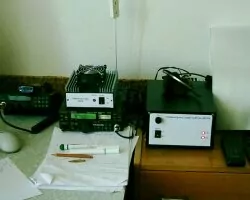
At that time, connections were made in FSK441 mode, which I realized through the WSJT program. I was starting with 7-element DK7ZB yagi and final stage with KP920A, which gave about 75W. Later I used the output stage with RE025XA, which I woke up for approx. 200 up to 250W.
The first connection, which I connected in this way was LZ1KWT. This is how the reflection sounded with FSK441 connection with this station.
Meteor scatter dnes
With the Geminid meteor shower approaching, I revived the possibility, that I will try meteor scatter again. About a week earlier I had installed and configured the MSHV program to work with the Kenwood TS-2000. This is my first time in it (and perhaps for the last time) saw FT8 operation on KV.
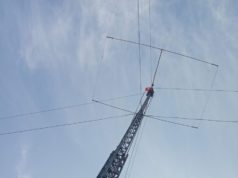
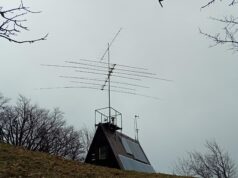
I have a lot of antennas at my disposal 144 MHz:
- 3-element DK7ZB yagi
- 6-elementovou YU7EF yagi
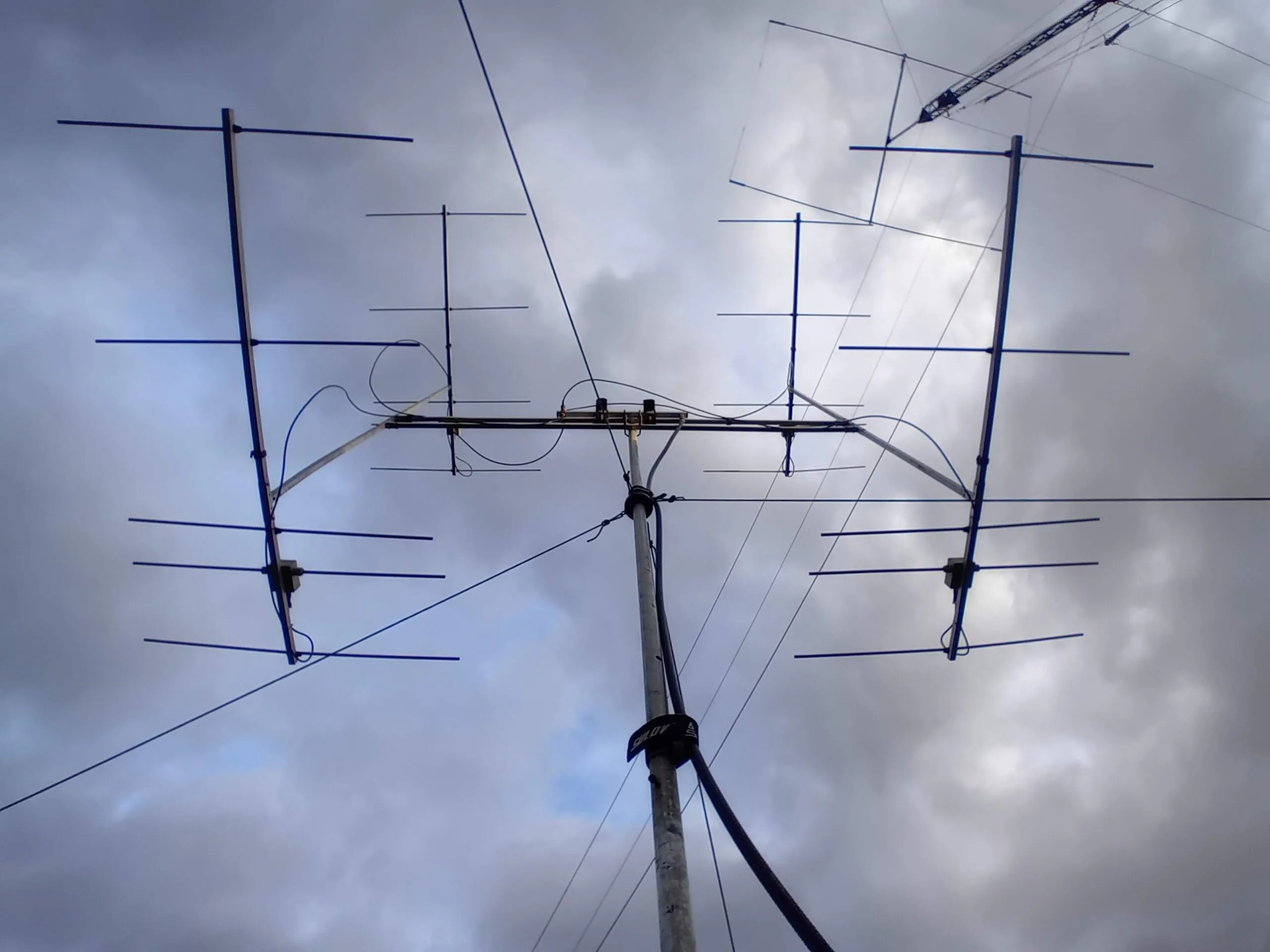
- quadruple 5-element DK7ZB yagi
- quadruple 6-element DK7ZB yagi
- twin 8-element DK7ZB yagis
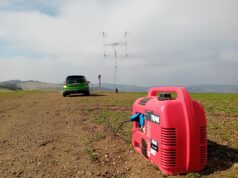
Together 69 elements, but no antenna is installed in the home QTH. Due to time constraints I didn't get around to erecting any in the garden until Saturday 14th December. That was already the maximum of the Geminids behind us. A square of 5-element DK7ZB yagis grew in the garden. During the evening I started to monitor and receive the first sessions of broadcasting stations in MSK144 mode.

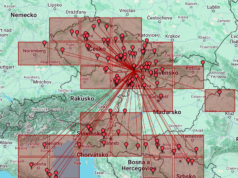
The income looked promising, so I approached Ned LZ1DX asking for a sked. Distance 929 to KN22TK, although it belongs to the smaller ones from the point of view of meteor scatter, but I was mainly interested in trying it out. We started shortly after half past eleven in the evening. I also listened to the signal by ear. The MSK144 signal sounds like this:
A few sessions later I hear a strong burst. I reach for the mouse, to enter a report and switch the broadcast message... and I see, that MSHV has already set the report and even changed the report! It was a little surprising. The program thus realizes the connection to the end without the intervention of the operator. He would probably write it down in the log (if any were connected). I definitely need to become more familiar with MSHV. Peťo OM8WG also greeted via ON4KST chat, who has much more experience with this operation. Hopefully I can get an antenna for 144 MHz to install permanently, so that I can devote myself to this operation regularly. Used setup on my side: MSHV connected to Kenwood TS-2000, LNA HA8ET and power 90W through 12m ½" coaxial to 4x5el.DK7ZB yagi.